
Raku Firing

This week I experimented with Raku Firing. I used 50/50 clay and threw some pots and made some tiles that I hung up as a finished mobile. 

My pieces in a Raku kiln- I fired to cone 06 fast. It took about 4 hours to reach temperature.

I had two metal garbage cans with holes in the sides and layered sawdust on the bottom. Then I ripped up strips of newspaper and crumbled them up. 
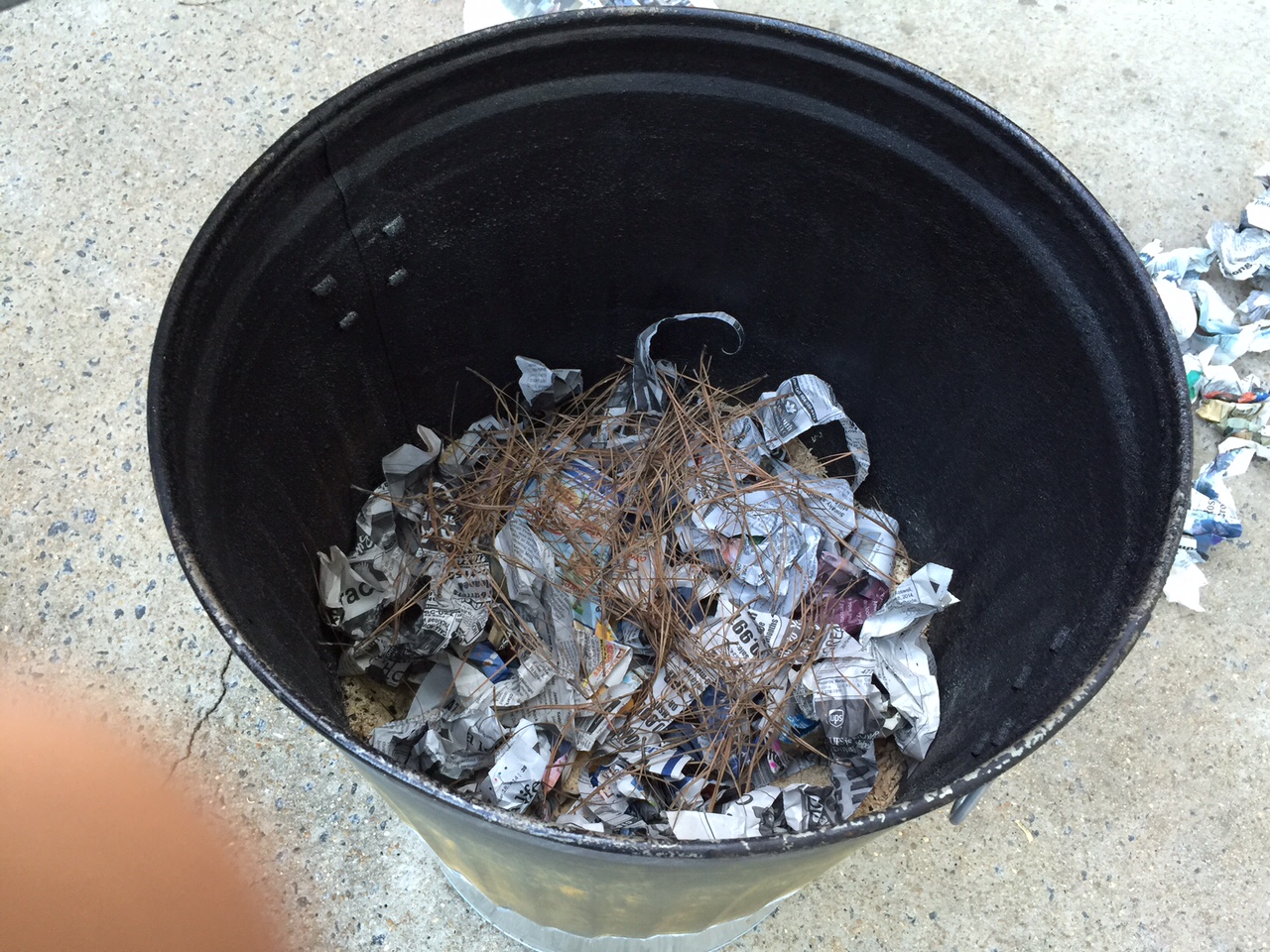
In the larger garbage can I added pine straw and more sawdust.


Once the pots reach temperature you take them out hot and immediately put them in the garbage cans.

The combustible material immediately combusts and then there is the fire.

Big fire...

The small can had the smaller tiles in it.

I had a hard time getting the flames to go out in the larger can. So we banged the lid to make sure the oxygen wasn't getting in.

After 20 minutes this is what it looks like inside when you take the lid off.


The pots were still really hot.

One of the pots finished cooling off.

The test tiles finished as a mobile. 

My cylinder finished.

My bowl finished.

Over all I enjoyed the Raku process and will definitely try it again but maybe with a figure or a large head next time. Its a very physical process and I enjoyed the work. 

Comments

Popular posts from this blog

Palissy Ware

Bernard Palissy (1509-1589), French potter,  geologist and naturalist (Retrieved from: http://fineartamerica.com/featured/3-bernard- palissy-french-potter-sheila-terry.html ) "Palissy Ware" is a form of 19th Century ceramics invented by French potter Bernard Palissy.  At the time of its inception, Palissy Ware was known as "Rustique" Ware by Palissy himself. Palissy Ware is made out of earthenware and usually depicts realistic water or pond scenes with individually painted snakes, frogs, and foliage; "Palissy's distinctive style of polychrome lead-glazed earthenware in a sombre earth-toned palette, using naturalistic scenes of plants and animals cast from life,[1] was much imitated by other potters both in his own lifetime and especially in the 19th century, when pottery in Palissy's style was produced by Charles-Jean Avisseau of Tours, who rediscovered Palissy's techniques in 1843, his relatives the Landais family of To...

Meissen Figurines

The history of Meissen Figurines is an interesting saga. I never knew that these little people my grandparents had on their buffets were the coveted objects of kings. During the Yuan Dynasty (1280-1368), Porcelain was born in China. By the 17th century, Europeans were eager to get their hands on this strong ceramic material. China, who was making money on their sought after creations did not want to give up any secrets. So, early in the 18th century, "Augustus the Strong, elector of Saxony, arrested alchemist Johann Fredrich Bottger and imprisoned him in the town of Meissen: his mission, to discover the secret formula for hard paste porcelain. "(http://www.rauantiques.com/library/meissen--the-allure-of-continental-porcelain-506.html ) By 1708, our man Bottger figured out the formula and was released. Sure enough the factories in Europe got in on the competitive action and began creating with porcelain. Four Seasons Figurines By Meissen Source: http://www.rauantiques...

Thrilled to be featured in the New Mexican’s Weekly Magazine of the Arts, “Pasatiempo”

"Another Birthday" 2024 Clay, Glazes Here is a link to the online article which was published in the February 28, 2025 real live physical newspaper Friday art section of The New Mexican :  https://www.santafenewmexican.com/pasatiempo/turner-carroll-gallery-turns-history-on-its-head-in-new-exhibition/article_a25205b8-ed6e-11ef-aab7-a34c880f2c57.html  Turner Carroll Gallery Turns History on its Head in New Exhibition santafenewmexican.com Nicole Merkens Art & Design www.nicolemerkens.com   Insta:  @artgirl253 Facebook:   https://www.facebook.com/nicolemerkensart